

01
Repeated flight path
Wasps flying in and out of the same hole, gap, roofline, wall, soil area or structure may indicate a nest.
Found wasps flying in and out of one area?
Do not block, spray or disturb an active nest. I assess the nest location, access and activity before recommending the safest practical treatment approach.
Guide pricing: accessible paper wasp nests from $180 incl. GST; German wasp ground nests from $230 incl. GST. Difficult-access nests quoted individually.
Wasp treatment only — no bee or beehive removal. North Shore properties only.
Avoid disturbing an active wasp nest or blocking the entrance because wasps may become defensive or find another way through the building.
The best next step depends on where the nest is located, how active it is, whether people or pets use the area, and whether the nest is in a wall, roof, ceiling cavity, ground area, tree, shed or exterior structure.
If wasps are flying in and out of one point repeatedly, treat that as an active nest until proven otherwise.
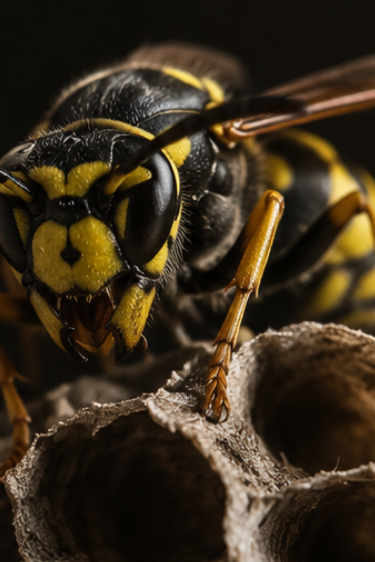
Wasps passing through one area repeatedly are usually more important than the occasional wasp flying past.
Wasps flying in and out of the same hole, gap, roofline, wall, soil area or structure may indicate a nest.
Nests near doors, paths, decks, children’s play areas, pets or outdoor seating should be treated carefully.
Noise or activity from inside a ceiling cavity, wall void or roof area can suggest concealed nesting.
Increasing activity can mean the nest is growing or becoming more noticeable as wasps move in and out.
Blocking the entrance before treatment can trap wasps, increase defensive behaviour or force them to find another route.
If the nest is inside a wall, ceiling cavity or roof space, blocking the outside opening too early may push activity into areas you do not want them entering.
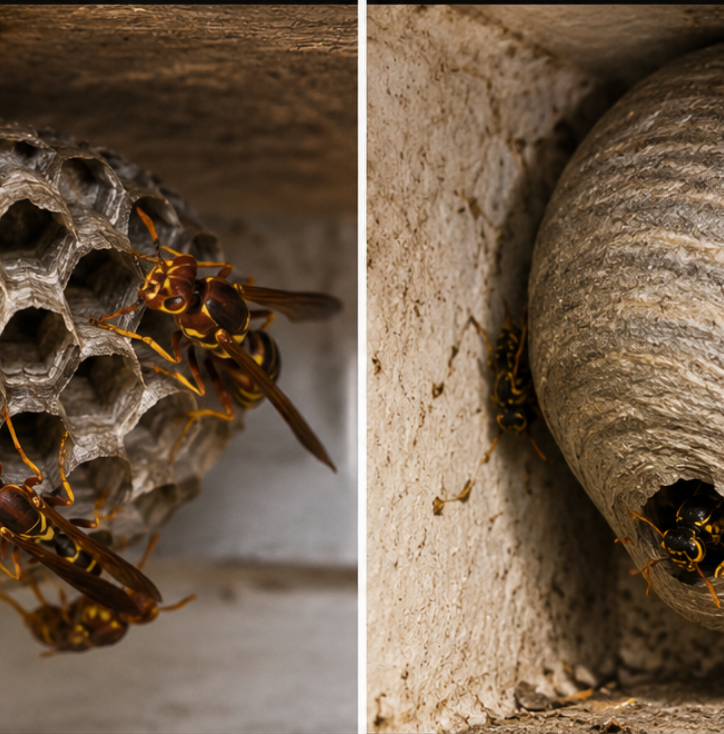
I start by asking where the wasps are entering, how long the activity has been happening, how active the nest appears and whether it is near people, pets or accessways.
Where safe and practical, I assess the nest location, flight path and access. The treatment method depends on whether the nest is visible, concealed, external, in a cavity or difficult to reach.
After treatment, I explain what activity may continue temporarily and what to avoid doing around the nest area.
The exact approach depends on nest location, access and safety, but the process usually follows these steps.
Identify the main flight path, entry point, nest area and nearby safety concerns.
Apply the suitable treatment method based on where the nest is and how it can be accessed safely.
Give clear advice on temporary activity, when to avoid the area and whether nest removal is required later.
A visible paper wasp nest under an eave is not the same as German wasps entering a ground nest or a ceiling cavity.
Not always. Some wasp activity may continue temporarily after treatment as wasps return to the nest area.
This does not automatically mean the treatment has failed. Returning wasps may still contact the treated area before activity reduces.
Avoid disturbing, sealing or removing the nest area too early unless specifically advised.
Pricing depends on the wasp type, nest location, access, height, risk level and whether the nest is visible, in the ground, in a ceiling cavity or hard to reach.
For accessible paper wasp nests where the nest is visible, reachable and safe to treat.
For ground nest activity where wasps are entering and exiting from one soil, garden, lawn or bank area.
For nests in ceiling cavities, wall voids, high areas, difficult access locations or higher-risk situations.
Send a photo or short video of the activity if safe to do so. Do not get close to the nest to take photos.
No. Do not knock down an active nest. Wasps can become defensive and sting repeatedly when the nest is disturbed.
Do not block the entry point before treatment. Blocking the opening may trap wasps or push them into another route, especially if the nest is inside a wall or ceiling cavity.
Nest removal depends on access, location and whether removal is necessary. Some treated nests can be left alone if they are inactive and not creating a practical issue.
Old nests are generally not reused in the same way, but removing a visible dormant nest can still be sensible when it is accessible, unsightly or causing concern. The area should be checked for current activity first.
Ceiling cavity, wall void, height or difficult access nests can involve more risk, more time and a different treatment approach. The price should be confirmed after understanding the access and activity.
Tell me where the wasps are entering, how active it looks and whether it is near people, pets or accessways. Do not disturb the nest before contacting me.